
FIELD WORK · 3 min read
Does a Faster Disc Go Farther at 240 Feet?
At a comfortable 240 feet, what does a speed 9 buy you over a speed 7? Compare the H13 Adventurer and Lone Star Mad Cat by where they land, not just how far.
A speed rating isn’t a distance prediction
No—not automatically. Think of a basket 240 feet away with a tree guarding its left side. A drive that travels 250 feet but finishes behind the trunk has solved the distance problem and created a putting problem.
What you want to know is which disc gets to the open side most often at your ordinary throwing effort.
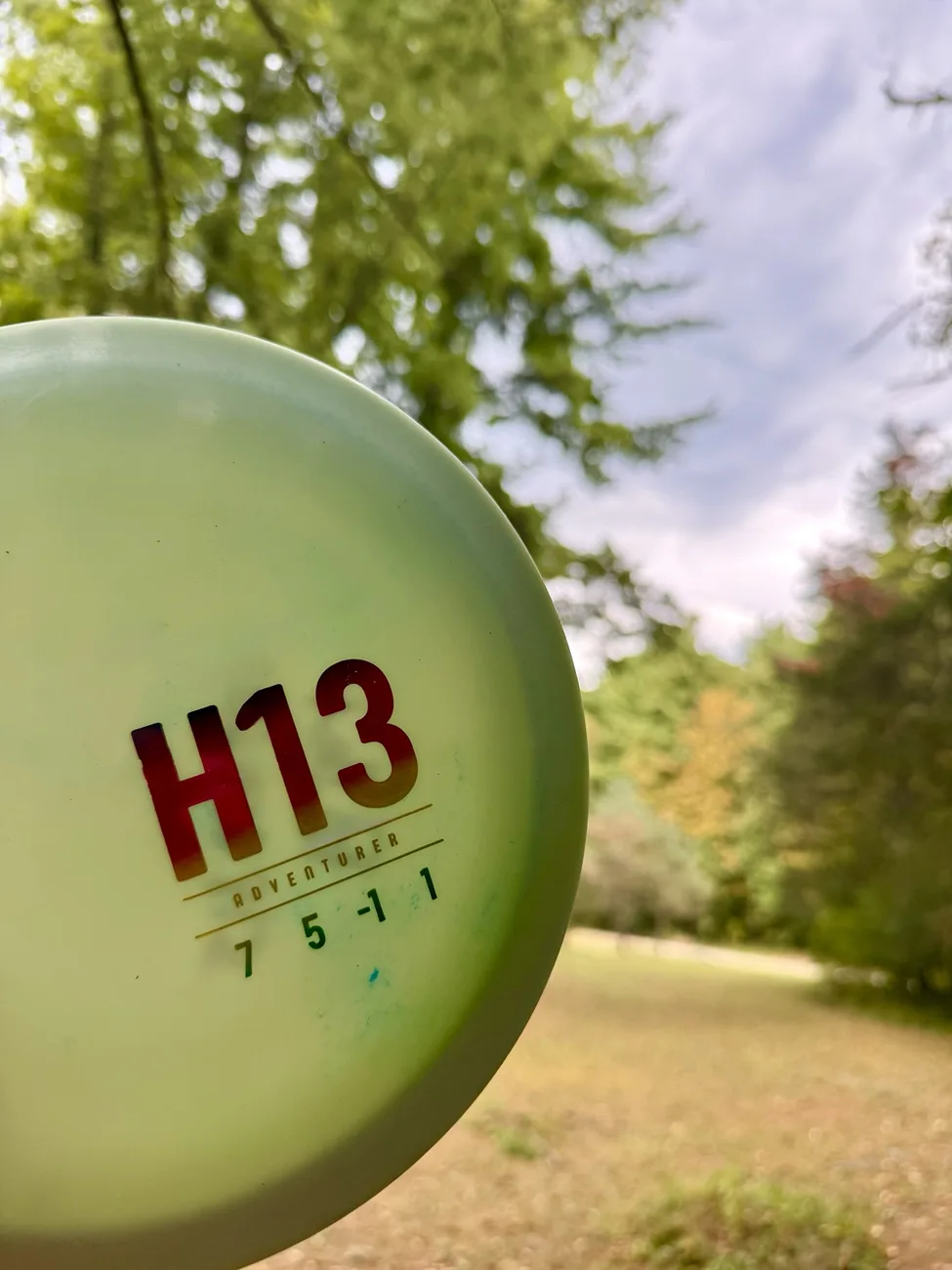
Take the H13 Adventurer (7 / 5 / −1 / 1) and Lone Star Mad Cat (9 / 5 / 0 / 2). Both have a glide rating of 5. The Adventurer’s numbers suggest some turn and a gentler finish. The Mad Cat’s suggest more resistance to turn and a stronger finish.
For a right-hand backhand, that could mean the 7 keeps moving forward while the 9 finishes left sooner. Those are expectations, not measured results for either disc at 240 feet.
What the Blue Jay field data actually tell us
In our separate one-speed session, the Spore landed 245 feet from release and the Glitch landed 193. Both have a speed rating of 1.
That 52-foot spread is a useful reminder that two stamps showing the same speed don’t promise the same landing. It doesn’t establish an average for either mold or tell us which fairway driver wins this comparison.
Run the 240-foot test
Mark one release point and a target 240 feet away. Put two markers 15 feet either side of the target to give yourself a 30-foot-wide landing lane. Warm up, then throw five pairs at the effort you’d use in a round.
Alternate which disc goes first. Use the same release angle and note wind changes; don’t throw harder just because you’ve picked up the 9.
For each landing, record distance from release, feet left or right of the target line, and whether you’d have a clear next shot. Keep the misses.
Compare the middle distance of each set of five, not the longest, and count the landings inside the lane. If skips matter on your course, note first ground contact separately from the resting spot.
Which one earns the tee shot?
If the Mad Cat repeatedly carries farther and stays in the lane, that’s a reason to choose it on the open 240-footer. If the Adventurer reaches putting range more often, it gets the wooded tee shot—even if the longest drive of the day belongs to the 9.
And if both carry about the same distance, try a target that asks for a left finish. A useful difference in shape can justify two discs where a few extra feet can’t.
Compare exact photos, price, condition and flight numbers in the live inventory—or join the Flight List for new drops and field notes.