
BLUEJAYDG FIELD GUIDE · 10 MIN
How to play disc golf
A complete first-round guide to scoring, throwing order, lies, putting, course rules, safety and finding a course near you.
The goal and the score
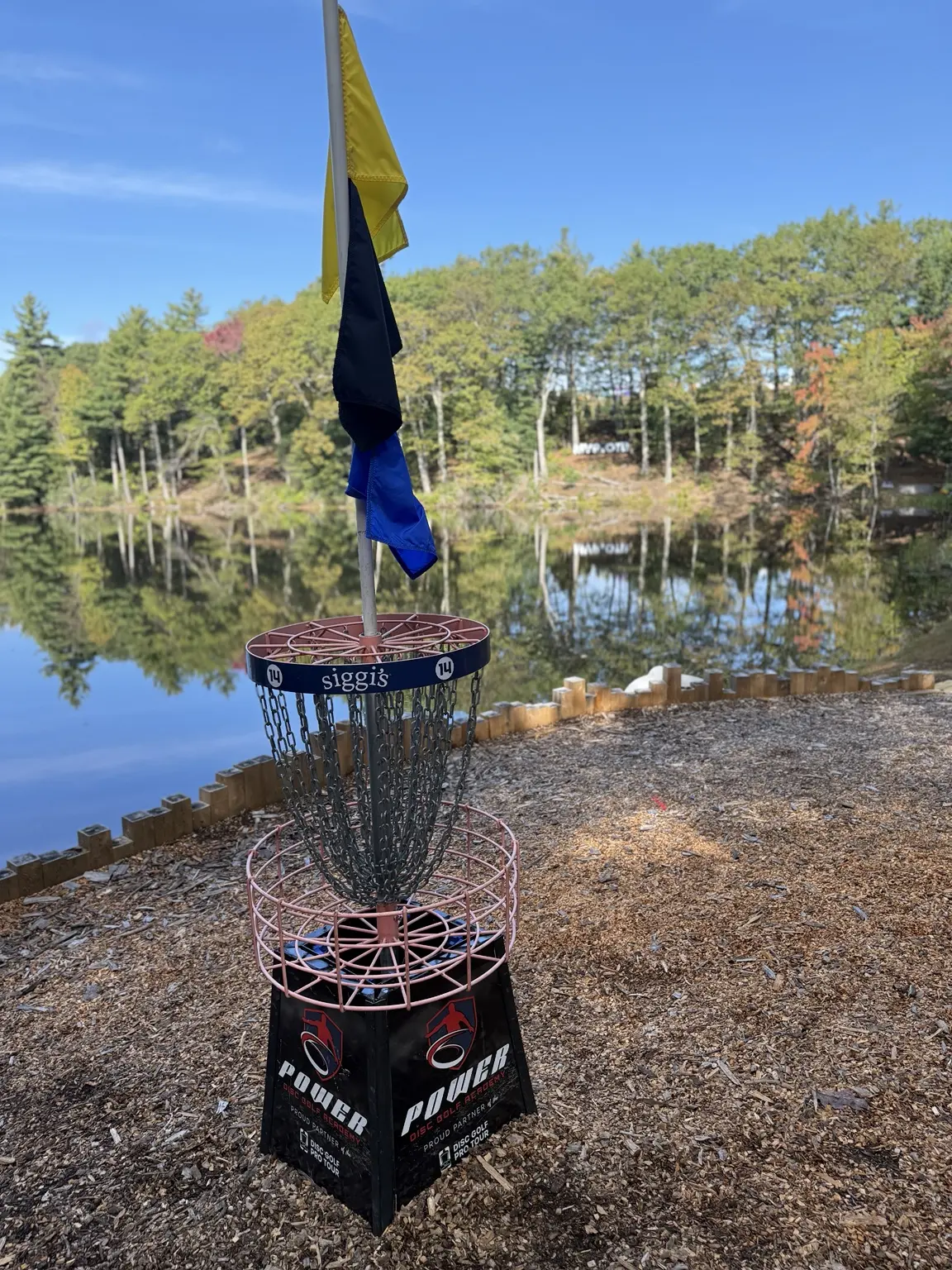
Disc golf follows the basic idea of traditional golf: finish every hole in as few throws as possible. Start inside the teeing area, throw toward the basket, then continue from each place the disc comes to rest.
The hole is complete when the disc is supported by the basket tray or chains. Count every throw plus any penalty throws; the lowest total score wins.
What to bring for a first round
One neutral putter or midrange is enough to begin, though a simple three-disc setup adds a putter, a straight midrange and a controllable fairway driver.
Wear shoes with reliable traction, bring water, check the weather and use a bright disc that is easy to locate. A UDisc course map or posted tee signs will show hole locations, distances, pars and special rules.
Teeing off and throwing order
On the first hole, choose a fair order or use the scorecard order. On later holes, the player with the best score on the previous hole normally throws first.
After the tee shots, the player farthest from the basket throws next. Stay behind the active thrower, remain quiet during the throw and never throw while a person is within range.
Play from your lie
Your lie is the place from which the next throw is made. For casual play, leave the thrown disc where it stopped and place a supporting point directly behind it when you throw, or mark the front edge with a mini marker.
Do not move branches or other permanent obstacles merely to create a throwing lane. When close to the basket, maintain balance behind the lie after releasing a putt.
Learn the basic throws
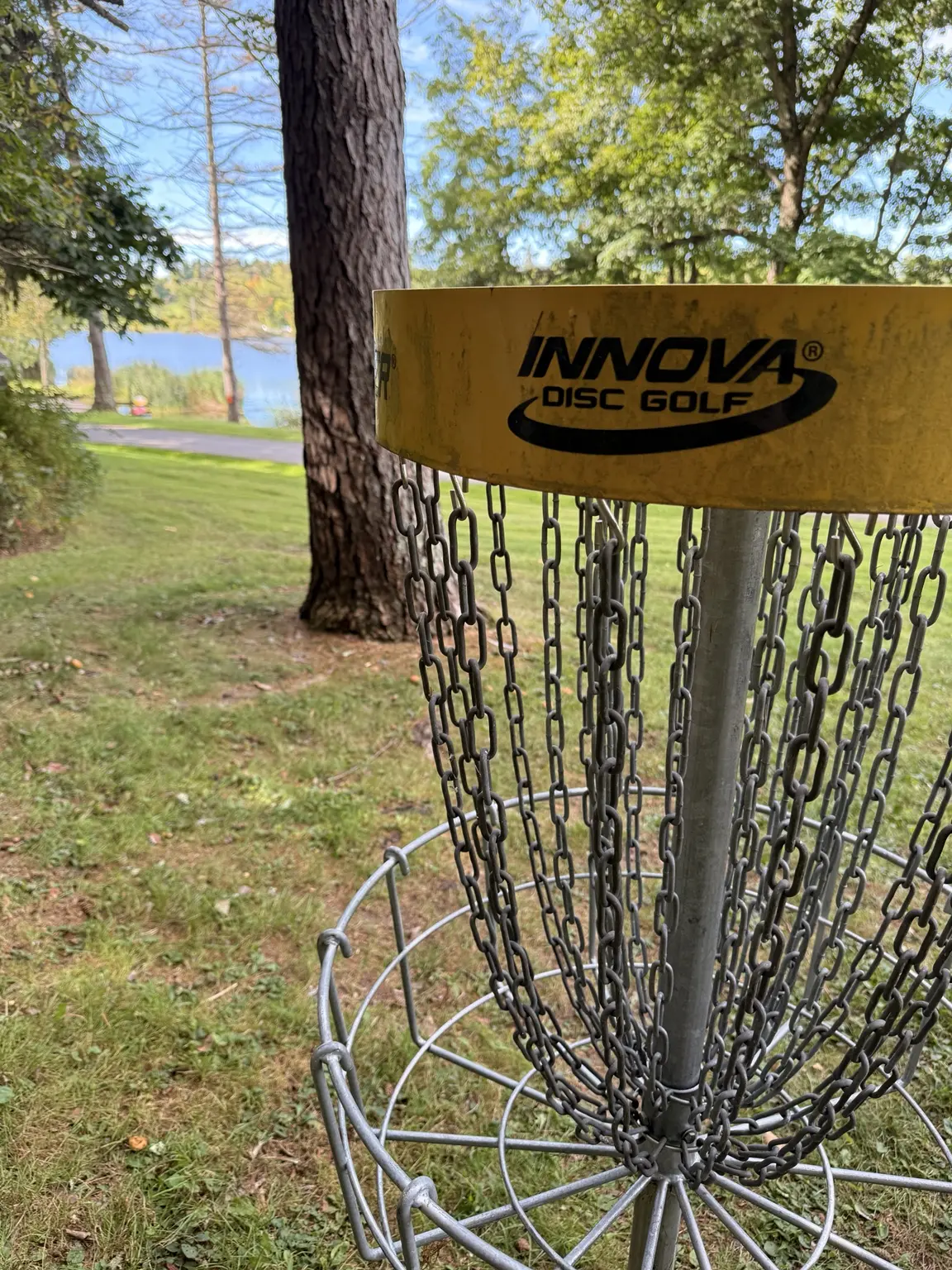
A backhand is the most common starting throw: lead with the shoulder, keep the disc close and release smoothly toward the target. A forehand moves across the body from the throwing side and can create the opposite finishing direction.
Begin with controlled standstills or short walk-ups. Flat, hyzer and anhyzer release angles shape the flight more reliably than trying to throw at maximum power.
Understand the tee sign
Confirm that you are playing toward the correct basket before throwing. The tee sign or course map may identify out-of-bounds areas, mandatory routes, drop zones and alternate basket positions.
Par is a reference score, not a requirement. New players should choose the shortest suitable layout and focus on safe landing zones rather than trying to match an advanced tee's intended distance.
Out-of-bounds, mandatories and lost discs
Course-specific rules control these situations. A disc completely surrounded by an out-of-bounds area normally adds one penalty throw and is played from the location allowed by the course rules. A mandatory marks a required route around an object.
If a disc cannot be found, stop the group behind you from waiting indefinitely and follow the posted or official lost-disc procedure. In casual rounds, agree on the rule before continuing and use the current PDGA rules for competitive play.
Safety and course etiquette
Wait until the landing area is clear, call 'fore' immediately if a disc travels toward someone and never assume a walker can see you. Let faster groups play through when practical, help cardmates watch their discs, return found discs, pack out trash and avoid damaging plants or course equipment. Check access, fees, closures, weather and local rules before traveling.
A simple first-round strategy
Choose a target you can reach with a balanced throw, aim away from the most punishing hazard and favor the center of the fairway. Use the slowest disc that can comfortably cover the distance.
After the round, note which shots felt easy, which direction you struggled to shape and whether you needed more control, turn or fade. Those observations are more useful than the final score.
COURSES TO PUT ON YOUR MAP
Two standout courses in every U.S. region
These are starting points from UDisc's current course directory and 2026 rankings—not the only great courses in each region.
Always confirm access, fees, closures and conditions before traveling.
Northeast
New England woods, elevation and destination golf.
Iconic woods, elevation, water carries and multiple layouts.
Technical resort golf through mature Vermont forest.
Mid-Atlantic
Technical woods and demanding elevation from Delaware through Pennsylvania.
Long, rocky and heavily wooded championship golf.
Big elevation, memorable downhill shots and wide views.
Southeast
Year-round variety across the Carolinas and Georgia.
Polished park course with varied distances and lines.
A destination mix of woods, open land and elevation.
Central
Championship properties across the Plains and Ozarks.
Purpose-built destination course with demanding golf.
Modern championship design with multiple challenge levels.
Midwest
Classic woods golf across the Great Lakes and Upper Midwest.
Long-established wooded destination with signature fairways.
Historic private course known for wooded character and stonework.
South
Wooded, technical courses from Arkansas to Louisiana.
Welcoming property with layouts for beginners through professionals.
Distinctive bayou golf with tight, technical fairways.
Southwest
Pine forest, altitude and desert-region terrain.
High-country pine golf with a well-traveled championship layout.
Mountain-town course and UDisc's top New Mexico course for 2026.
West
Mountain golf and legendary California terrain.
Historic, technical golf with elevation and the famous Top of the World finish.
High-elevation mountain golf outside Denver.
Northwest
Towering trees, state parks and true Pacific Northwest scenery.
Beautiful state-park golf with open and wooded challenges.
Scenic resort course with a polished, challenging layout.
FIND YOUR NEXT ROUND
See disc golf courses near you.
Enter only your ZIP code to open the BlueJayDG course finder and explore nearby places to play.
SOURCES & FURTHER READING
Rules, technical explanations and manufacturer terminology were checked against these primary references.
BEFORE YOU GO
Start every hole from the tee and count every throw. Play safely from the lie and check the posted course rules. Choose a beginner-friendly layout and prioritize control over power.
Ready to use this on the course?
Find courses near me →