
EQUIPMENT SCHOOL · 15 min read
The Plastic Lab: how to choose disc golf plastic
Plastic names get confusing fast. This guide starts with what you can feel—grip, firmness, flex and wear—then maps those choices across the major brands.
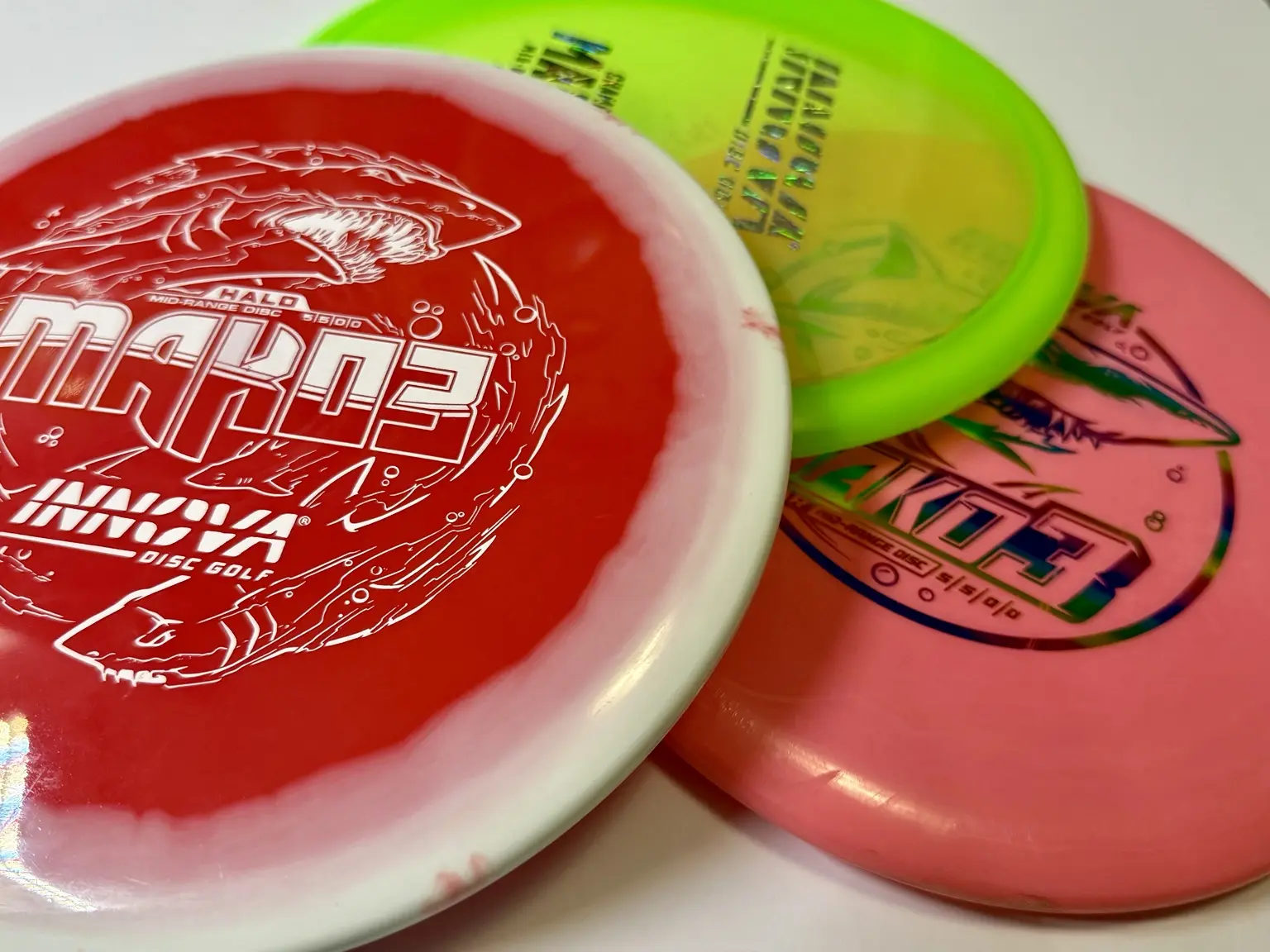
The plastic can change the whole experience of a mold
Pick up two copies of the same mold in different plastics and they may barely feel related. One is firm and smooth, the other flexible and tacky.
They can even begin with slightly different flights, then change at different rates as they hit trees and pavement.
That is why I do not think of premium plastic as a simple upgrade. A base-plastic putter may be perfect for daily practice because it grips well and feels consistent.
A premium fairway may be worth the extra cost because it keeps a trusted flight through seasons of use. The expensive choice is only better when it helps the job.
Start by naming the shot you need. Once that is clear, grip, firmness and durability stop feeling like a wall of marketing names and start becoming useful decisions.
Most plastics fit into four useful families
Every manufacturer has its own vocabulary, but most blends land in one of four broad groups. Base plastic emphasizes grip and price. Mid-grade blends add durability without going all the way to premium.
Premium plastic is built to resist wear. Specialty blends change something specific, such as weight, flex, glow, recycled content or appearance.
The lines are not perfect. A soft premium blend can feel tackier than a firm base plastic, and a special run may use familiar material under a different finish. Treat the family as a starting point, then trust the exact disc in your hand.
| Plastic family | Typical feel | Wear rate | Best starting uses |
|---|---|---|---|
| Base | Tacky; often offered in soft-to-firm options | Fastest | Putting, short approaches, low-cost testing and mold cycling |
| Durable / mid-grade | More structure with useful grip | Moderate | Approaches, mids and players who want grip plus added life |
| Premium | Smooth, firm or gummy depending on blend | Slow | Drivers, wooded courses and flights that must stay consistent |
| Specialty | Varies by purpose | Varies | Glow, lightweight, recycled, extra-flexible and visual special runs |
Match the blend to the work the disc will do
For a putting putter, I care first about a clean release and a feel I trust. It is not taking full-power tree hits very often, so maximum durability matters less than grip and firmness.
That is why so many putting putters live in base plastic—and why matching practice copies are affordable.
Approach discs have to balance touch with impact. A tacky base blend may grab the ground and straighten as it seasons; a flexible premium blend can stay consistent longer and soften some landings.
Midranges can go either way depending on whether you want quick seasoning or long-term stability.
Drivers are where premium plastic usually makes the clearest case for itself. Faster impacts and sharper rims create wear, especially in the woods.
A durable fairway or distance driver keeps the flight you learned for longer, which makes every replacement less urgent.
A plain-English map across the major brands
The easiest way to decode plastic names is to compare the job each blend is trying to do. The table below is a shopping map, not a claim that the materials are chemically identical.
Runs, molds, colors and weights can all feel a little different, so use it to narrow the choices and then judge the exact disc.
I grouped a few related brands together where the families line up. Latitude 64, Dynamic Discs and Westside share many parallel categories, while MVP, Axiom and Streamline use the same material families across overmold and single-mold discs.
| Brand family | Base / putting | Premium workhorses | Specialty examples |
|---|---|---|---|
| Innova | DX, KC Pro, R-Pro | Star, Champion, GStar | Halo Star, Blizzard Champion |
| Discraft | Putter Line, Jawbreaker | ESP, Z, Big Z, Titanium | Z FLX, Z Lite |
| Latitude 64 / Dynamic / Westside | Zero / Classic / BT; Retro / Prime / Origio | Opto / Lucid / VIP; Gold / Fuzion / Tournament | Royal Grand / Supreme, Orbit, Moonshine |
| Discmania | D-Line, P-Line, Exo | C-Line, S-Line, Neo, Lux | Chroma, Horizon, Meta, Vapor, Forge |
| MVP / Axiom / Streamline | Electron | Neutron, Proton, Plasma | Fission, Cosmic Neutron, Prism |
| Prodigy | 200 and 300 Series | 400, 400G, 500, 750 | 750 Glimmer, ReBlend, Air |
| Kastaplast | K3, K3 Hard, K4 | K1 | K1 Soft, K1 Hard, K1 Glow, K1 Grind |
| Gateway | SureGrip, SS, SSS, Eraser | Diamond, Platinum | Hyper Diamond, Nylon |
| Lone Star Disc | Victor 1, Victor 2 | Alpha, Bravo | Lima, Glow |
Firm or flexible? The answer is in your release
Firm plastic feels crisp because the rim does not move much under pressure. Players with a strong grip often like that structure, especially in summer.
Softer plastic gives more and can feel reassuring in the cold, although too much flex may make the release feel vague.
Flex can show up after the flight too. A soft approach disc may absorb more energy when it lands, while a firm overstable driver can produce a stronger skip.
Surface, rim shape and landing angle still matter more, but flex is worth considering when two discs cover the same distance.
There is no correct firmness for everyone. Grip the disc the way you actually throw it. If the rim bends more than you like or the surface feels uncertain with damp hands, that answer matters more than another player’s favorite blend.
The weather gets a vote
Cold can make a familiar driver feel like a different disc. Flexible blends such as GStar, Z FLX, K1 Soft or Bravo often stay comfortable when a summer-firm plastic turns rigid.
In serious heat, I may want the opposite—a firmer blend that does not feel loose during the pull.
Rain is mostly about managing grip. Texture helps, but no plastic replaces a dry towel and a dry throwing hand right before the shot.
Tacky base blends and grippy opaque premiums often inspire confidence; some smooth translucent plastics need more care. If the tee is slick too, slowing the run-up is usually smarter than forcing full power.
Wind has more to do with stability, speed and angle than with plastic alone. Some premium runs begin more overstable, but the flight in front of you should always outrank the label.
A worn disc can become a better tool
Normal seasoning is not the same thing as ruining a disc. As the edge collects small impacts, many molds gain turn and lose some fade.
Base plastic gets there quickly; premium plastic takes longer. Players use that on purpose by carrying fresh and worn copies of the same mold.
That approach, usually called cycling, keeps the hand feel familiar. A fresh mid may handle wind, a seasoned copy may fly straight and the oldest one may hold a turnover.
The catch is that a perfectly worn flight can be hard to replace once the disc finally leaves the bag.
Deep cuts, warping and sharp damage are different. Those can affect the release or even the disc’s legality. With a used disc, I look for predictable wear—not a structural problem someone hopes to call seasoning.
Specialty plastic is best when it solves something specific
Lightweight technologies such as Blizzard Champion, Z Lite, Fission, Air and Lima can help a player accelerate a driver without making it feel completely empty in the hand. Glow plastic makes night golf possible.
Flexible blends help in the cold or on soft landings. Recycled blends such as ReBlend and K1 Grind give production material another life and often create their own visual character.
Orbit, Halo, Cosmic and Horizon treatments look great, but I still want to know what they do to the flight. Some special runs are firmer or more stable than the standard version; others mainly change the pattern. When possible, compare the profile and parting line with a copy you already know.
The specialty blend should earn its place. If it improves acceleration, visibility, weather grip, durability or confidence, it has a purpose. If not, the familiar standard plastic may be the better buy.
My one-minute way to choose plastic
First, name the job: putting, touch approach, straight midrange, everyday driver or utility shot. Then decide whether grip or long-term flight retention matters more.
Add your normal weather and the firmness you trust. Those answers usually leave only one or two sensible families.
Now look at the exact disc. Weight, dome, profile, color and condition can matter as much as the blend name.
If you already trust one manufacturer’s plastic, use the table to find the closest family elsewhere—but expect the surface and stiffness to feel a little different.
In the end, plastic should make the throw easier to repeat. The right choice is the disc you will reach for when the score matters, not the one with the fanciest label.
Compare exact photos, price, condition and flight numbers in the live inventory—or join the Flight List for new drops and field notes.