
DISC SPOTLIGHT · 4 min read
H13 Adventurer Disc Spotlight: Controlled Distance at 7 | 5 | -1 | 1
The H13 Adventurer is a neutral, glide-heavy fairway driver built for straight drives, easy hyzer-flips and controlled turnovers without a hard finish.
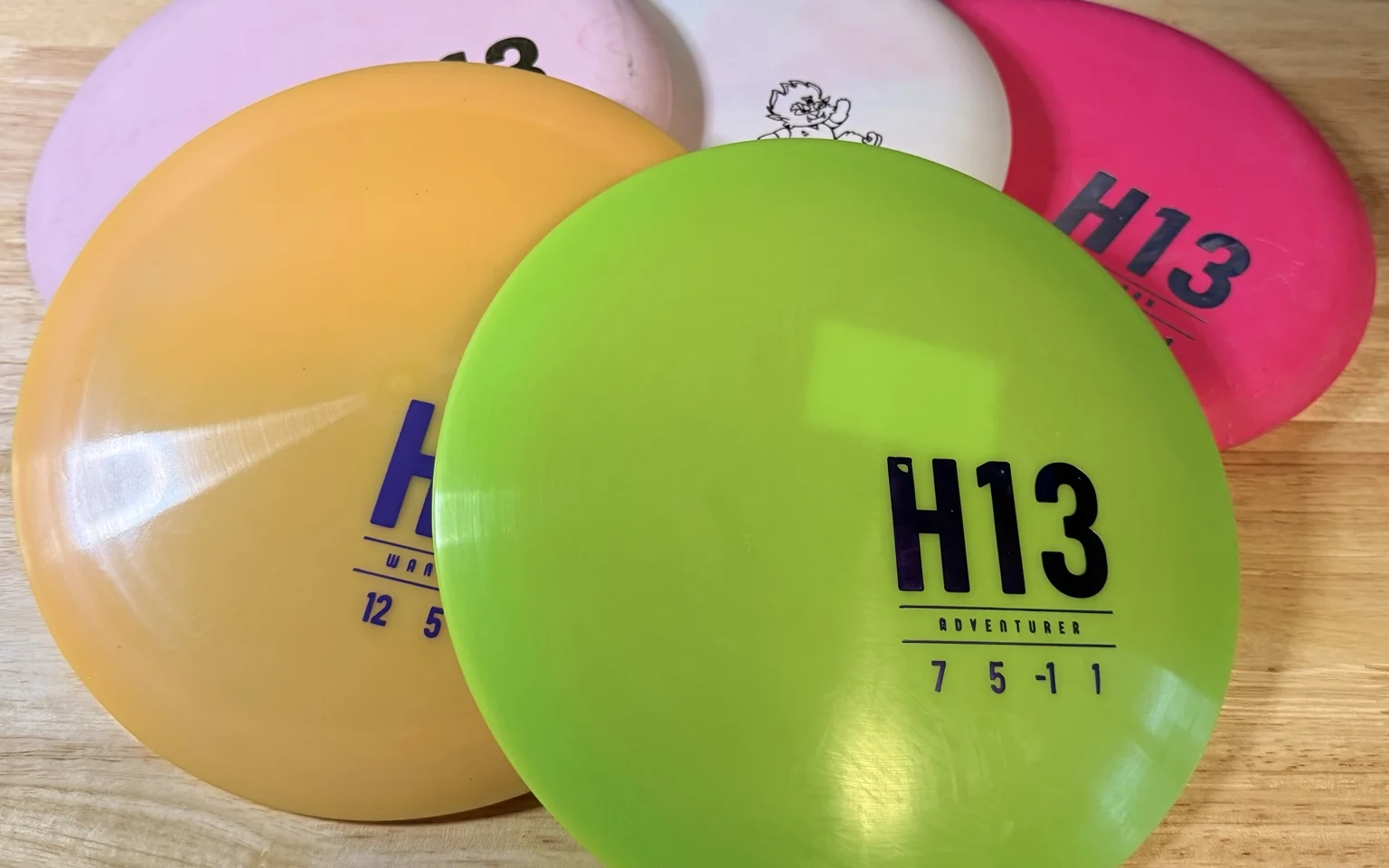
A controllable fairway for everyday arms
The H13 Adventurer is a neutral fairway driver designed to add distance without asking for the speed or precision of a wide-rimmed distance driver.
Speed 7 keeps the rim manageable, glide 5 creates easy carry, turn -1 allows a gentle high-speed drift and fade 1 produces a soft finish instead of a hard hook.
H13 describes the Adventurer as an all-skill-level driver for hyzer-flips, flex lines and turnovers. The PDGA approved the mold on June 13, 2024. Those labels fit the numbers: this is a line-shaping fairway driver, not a wind-fighting utility disc.
For players throwing roughly 230 to 280 feet, a flat release should produce a mostly straight flight with subtle movement and a gentle finish.
Lower-power throws may fade sooner, while stronger throwers can see a small S-curve or use the disc for long turnovers.
| Number | Flight job | What it means |
|---|---|---|
| 7 speed | Controllable fairway distance | Faster than a midrange without demanding maximum arm speed |
| 5 glide | Easy carry | Keeps moving down the fairway when released cleanly |
| -1 turn | Gentle high-speed drift | Can stand up from slight hyzer or track right from flat |
| 1 fade | Soft forward finish | Lands closer to its flight line instead of dumping hard |
Three release angles, three useful flights
Thrown flat, the Adventurer should push straight with only a small amount of lateral movement. That makes it useful for wooded fairways, placement drives and low-risk tee shots where a large finish brings trouble into play.
A slight hyzer release creates the signature hyzer-flip: the disc stands toward flat, rides on its glide and finishes gently.
On a controlled anhyzer, the -1 turn helps it hold the right-moving line without immediately fighting out. Calm conditions and tailwinds are the easiest places to learn all three shapes.
The Adventurer responds best to smooth acceleration and a clean nose-down release. If it fades too early, check nose angle before adding effort. If it turns sharply or wobbles, reduce off-axis torque before deciding the disc is too understable.
The H13 Adventurer on and off the course
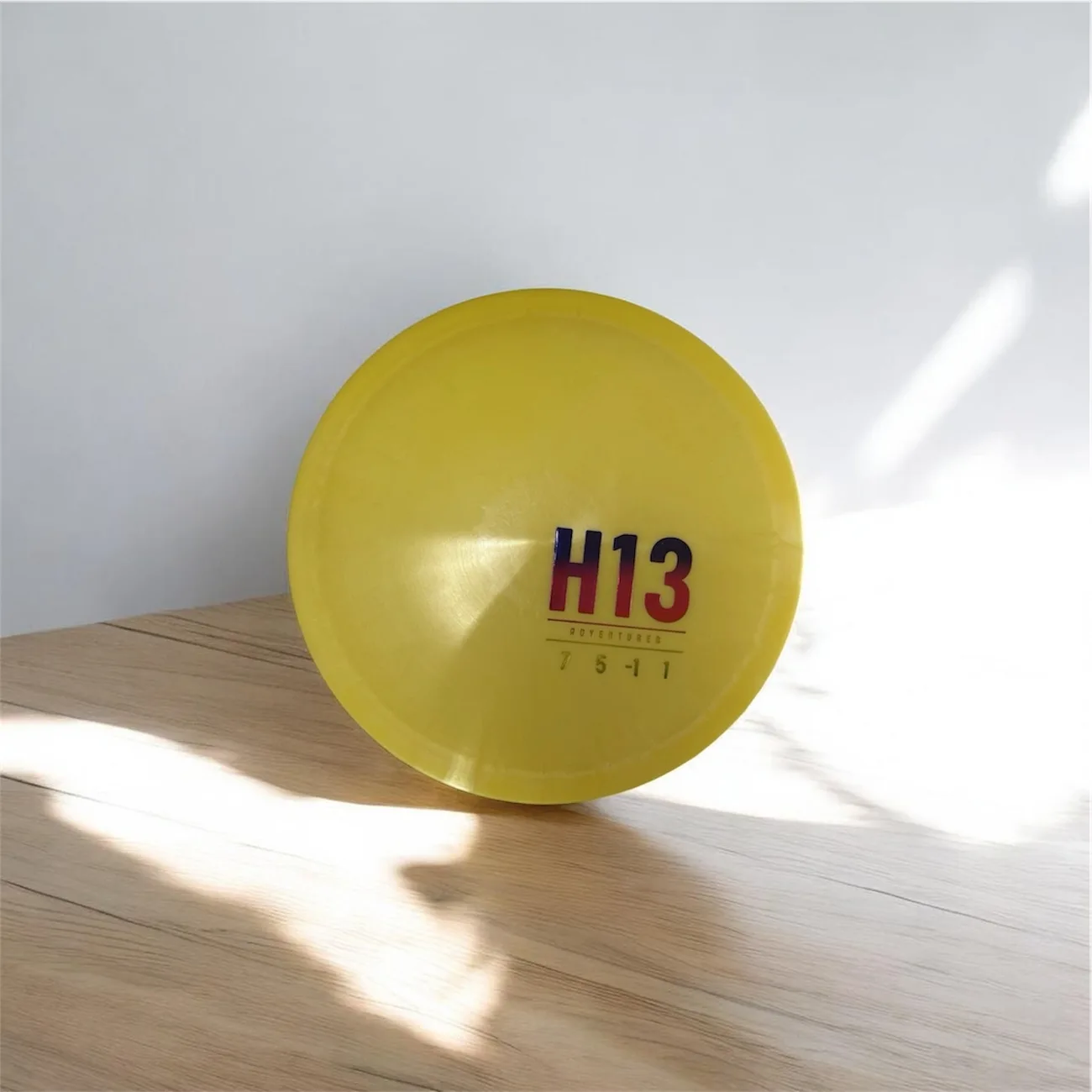
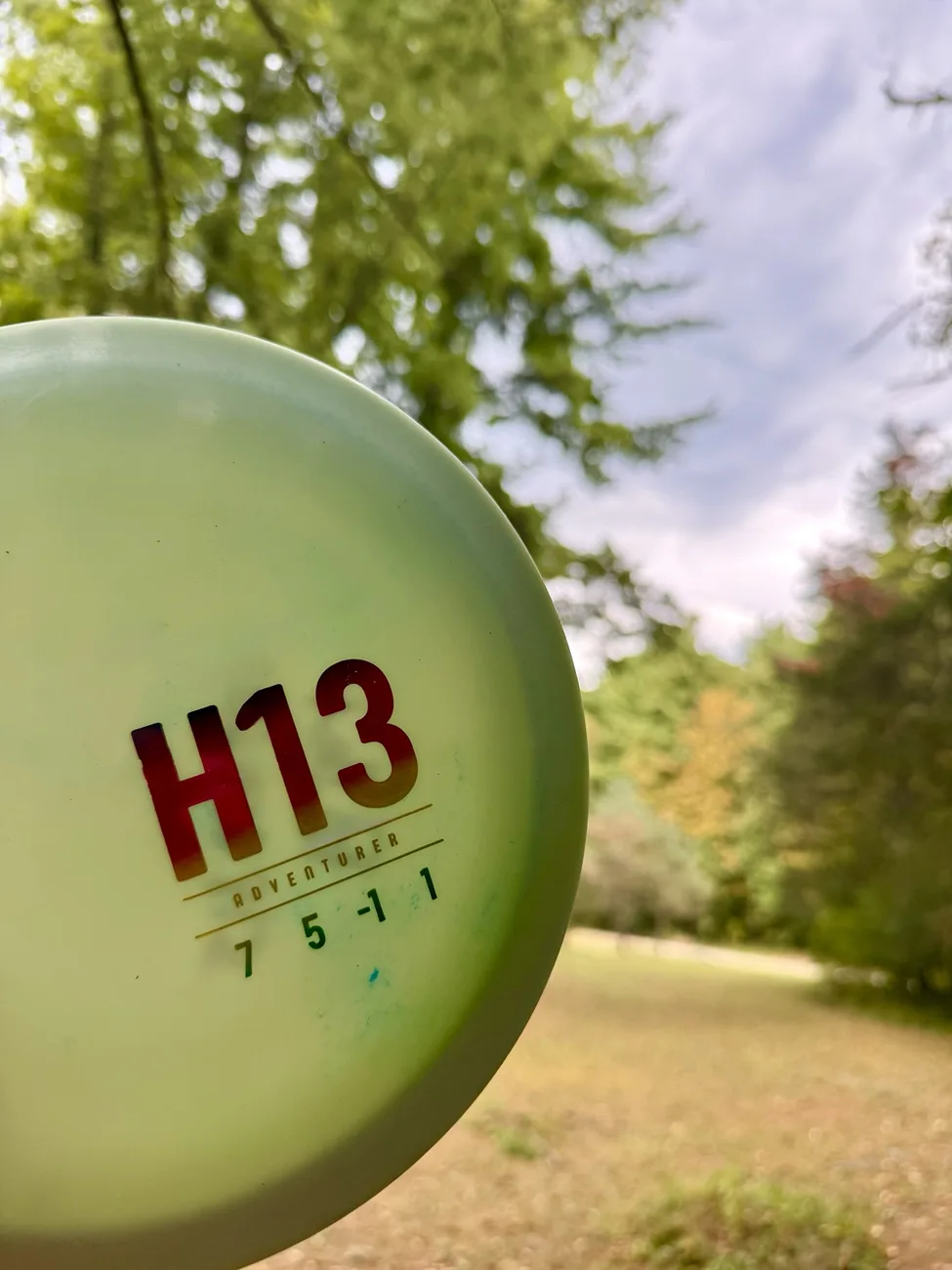
Where it fits in the bag
The Adventurer fits between a straight midrange and a faster control driver. It covers shots that need more carry than a mid but less skip, fade and rim width than a speed-nine driver.
Beginners can use it as a first fairway driver, intermediate players can lean on it in the woods and higher-power throwers can use it for turnovers or touch hyzer-flips.
It is not the first choice for a strong headwind. A headwind increases effective airspeed and can exaggerate the -1 turn, especially on a flat release. In that situation, add hyzer, reduce exposed angle or move to a more stable driver.
For a 230-to-280-foot thrower, the most valuable role is controlled distance. The Adventurer can stretch beyond a midrange without forcing the player into a faster disc that fades before reaching its intended cruising speed.
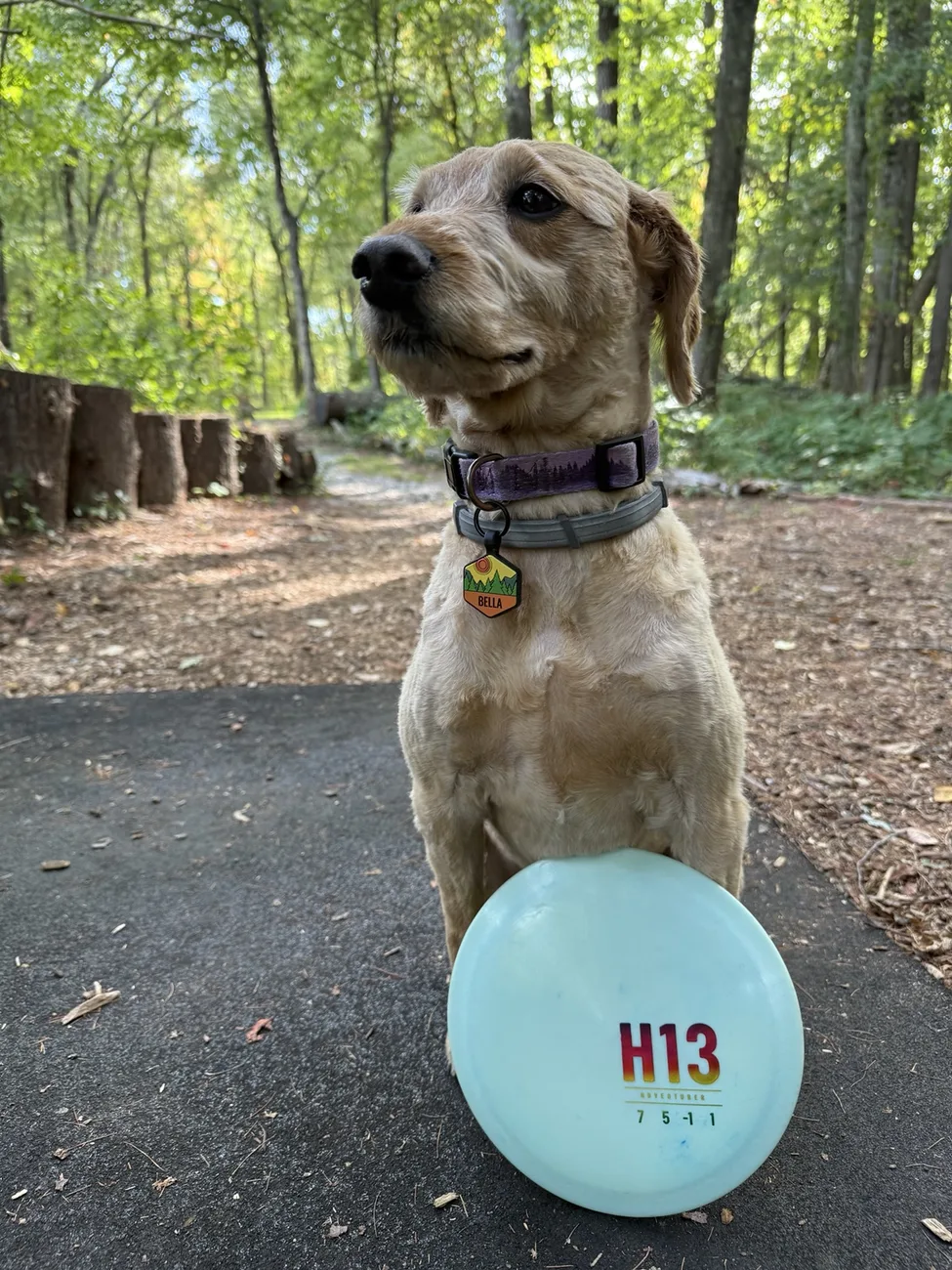
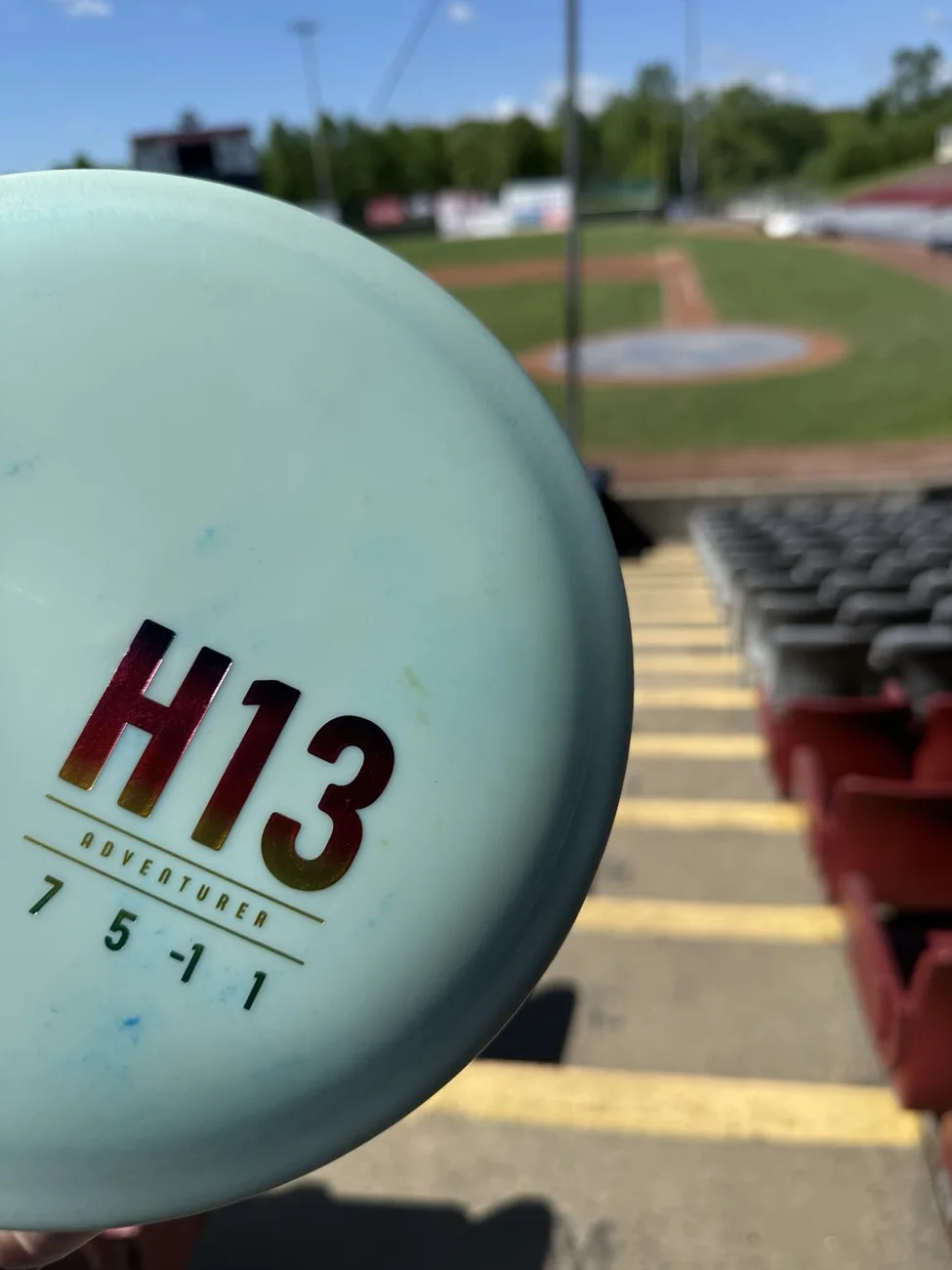
The Adventurer travels well
Blue Jay verdict
The H13 Adventurer succeeds by keeping the flight simple: controllable speed, useful glide, gentle turn and very little late fade.
It can grow with a player because the same mold that flies straight at developing power becomes a hyzer-flip or turnover tool as form and speed improve.
Bag it when you want one fairway driver to cover straight drives, soft shaping lines and controlled distance.
Pair it with a more overstable fairway driver for headwinds and hard-finishing shots, and the two discs can cover most tee-shot shapes without unnecessary overlap.
Compare exact photos, price, condition and flight numbers in the live inventory—or join the Flight List for new drops and field notes.