
FIRST TOURNAMENT GUIDE · 9 min read
Your First Disc Golf Tournament: What to Expect From Check-In to the Final Putt
Tournament golf feels slower and more formal than a casual round, but it is still the same game. Here is how registration, divisions, card etiquette, scoring and the long day actually work.
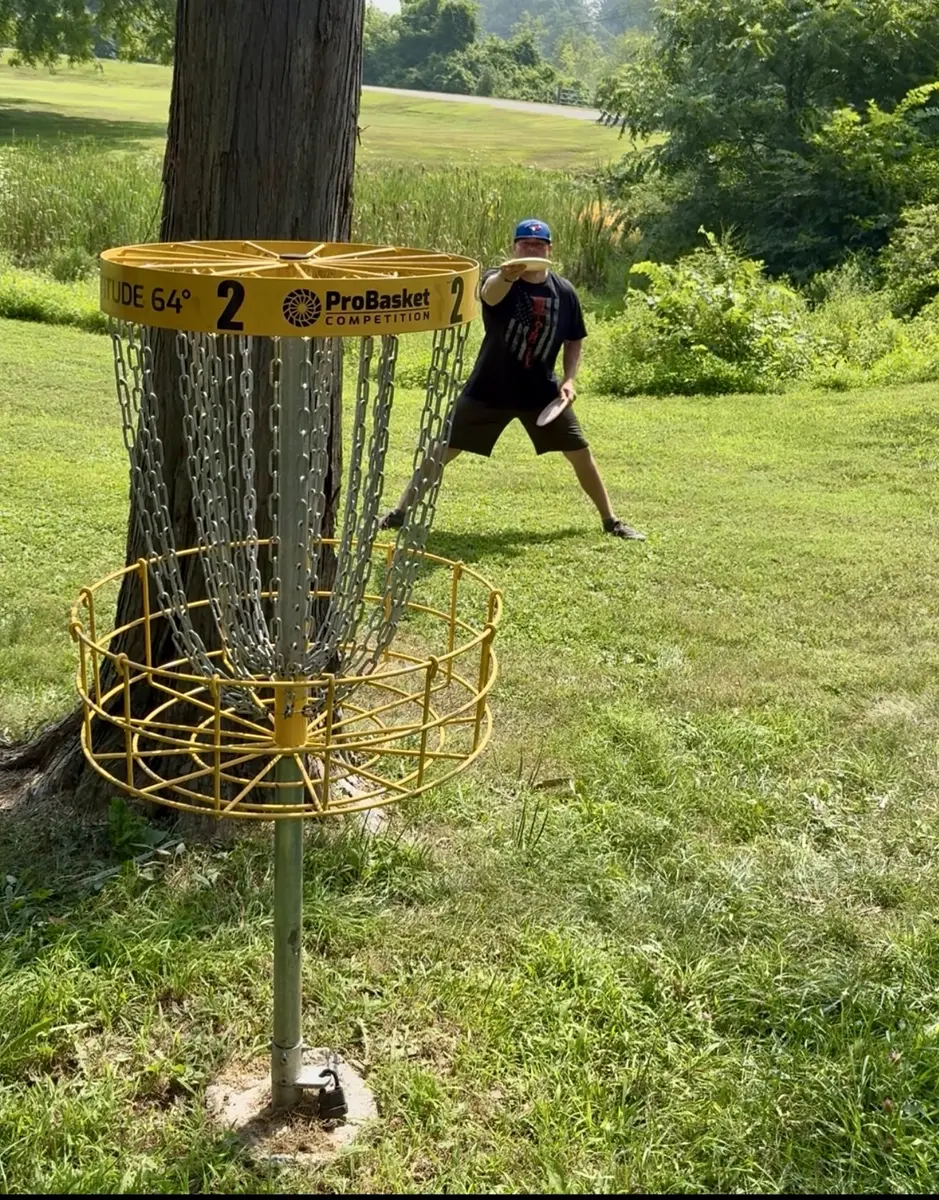
Choose the division that matches the player you are today
Registering is the first unfamiliar step. Read the event page carefully for the format, number of rounds, course assignments, check-in time and whether lunch is provided.
Amateur divisions are not a judgment of your potential; they are a way to compete with players who are at a similar point in the game.
If ratings are available, use the event's published eligibility rules. If you are unrated, ask the tournament director before registration closes. Most directors would rather place a new player correctly than sort out a division change on tournament morning.
Practice the course if you can, but do not turn the practice round into a search for a perfect line on every hole.
Identify out-of-bounds areas, mandatory routes, safe landing zones and the two or three holes where a conservative plan will save the most strokes.
Tournament morning has a rhythm
Arrive early enough to park, check in, use the restroom and warm up without rushing. The tournament director's meeting explains course-specific rules, out-of-bounds lines, relief areas, mandatories and how official scoring will work. Listen even if you know the course; event rules can change how a familiar hole is played.
After the meeting, find your starting hole and introduce yourself. Telling the card that it is your first tournament usually helps.
Experienced players can answer a procedural question, and the group knows that a calm explanation is more useful than assuming you understand an unfamiliar ruling.
Once the two-minute signal sounds, practice stops. Tournament pace is slower than a casual round because players mark lies, confirm scores, wait for other groups and give every putt full attention.
Carry enough water and food for a round that may last much longer than your usual eighteen holes.
| Stage | What happens | Your job |
|---|---|---|
| Before check-in | Parking, registration confirmation and warm-up | Arrive early and confirm the schedule |
| Player meeting | Course rules, OB, mandatories and scoring | Listen, take notes and ask clear questions |
| During the round | Official order, marked lies and group scoring | Be ready, stay quiet and verify scores |
| After the round | Score confirmation, lunch or awards | Review every hole before submitting |
Know the rules you will use on almost every hole
You do not have to memorize every unusual ruling, but you should understand the basics before the first tee. Know how to establish your lie, when a mini marker is required, who throws next, how to complete a hole, how out-of-bounds is scored and how to record a numerical score rather than writing plus or minus par.
Remain still and quiet while another player throws, stay behind the lie when practical and help watch every shot.
A tournament card works best when everyone tracks the landing area, confirms uncertain scores before moving on and makes rules calls respectfully.
If the group is unsure, state the question without arguing. PDGA rules provide procedures for provisional throws and appeals in situations that cannot be resolved immediately.
The goal is to protect the field and keep the round moving, not to win a debate in the fairway.
Bring a familiar bag and a patient scoring plan
Tournament morning is not the time to rebuild your bag. Bring the putter you trust, controllable mids and fairways, one wind option and backups for any disc you cannot replace during the round.
Mark your discs as required, pack a mini, towel, water, snacks, weather layers and a charged phone if digital scoring is used.
The best first-event strategy is boring in the right places. Aim for the fairway, accept a pitch-out when the hero line is unlikely and treat bogey avoidance as a skill. One mistake rarely ruins a round; the rushed decision after the mistake often does.
Use the brand paths below to compare broad lineups and plastics that are currently represented in the BlueJayDG catalog. The links lead to brand collections, not a recommendation that one exact disc will fit every tournament player.
Compare exact photos, price, condition and flight numbers in the live inventory—or join the Flight List for new drops and field notes.