
2026 DGPT YEAR IN REVIEW · 11 min read
The 2026 Disc Golf Pro Tour Year in Review: Bigger Stakes, Deeper Fields and Two Different Title Stories
Gannon Buhr controlled the MPO season, FPO produced a four-player argument, and the inaugural Powerball Cup closed the year with the largest purse in disc golf history. Here is what actually defined 2026.
A season that became larger without losing its competitive identity
The 2026 Disc Golf Pro Tour reached 23 tournaments across four countries and 18 states. More than 650 athletes representing over 25 countries competed for World Standings points and a place in the season finale.
Those numbers describe scale, but the better measure of the season was how many different stories remained meaningful into October.
The first year of Powerball as the Tour's presenting partner brought a visible increase in championship stakes. The inaugural Powerball Cup at Ivy Hill carried a record $350,000 purse, with $50,000 going to each division winner.
That money matters because professional disc golf has historically asked elite players to travel like major-sport athletes without always paying like them.
Growth did not make the golf predictable. The MPO season had a clear statistical leader, while FPO featured different leaders in wins, standings, consistency and major championships.
The finale rewarded two players whose paths to the title looked completely different.
Gannon Buhr made dominance look complete, not one-dimensional
Gannon Buhr finished first in the Powerball DGPT World Standings and then won the Powerball Cup by nine strokes. He completed the season with eight Tour victories, 15 podium finishes in 22 starts and one PDGA Pro Major title.
At Ivy Hill, he led the field in birdie percentage, fairways hit, strokes gained tee-to-green and both Circle 1 and Circle 2 in regulation.
That combination is the reason his season belongs above a simple win count. Power creates scoring chances, but his separation came from repeating useful drives and avoiding the bogey stretches that let a field back into an event. The finale was wire-to-wire rather than a late putting surge.
Richard Wysocki finished second in both the World Standings and Powerball Cup, with four Tour wins and nine podiums during the year. Calvin Heimburg added two wins, including a Major, while Silas Schultz won the PDGA Pro World Championship.
MPO still produced major moments outside Buhr's season, but nobody matched his full-year combination of volume and peak performance.
| Player | 2026 marker | Why it mattered |
|---|---|---|
| Gannon Buhr | 8 wins, 15 podiums, World Standings and Powerball Cup | The season's most complete body of work |
| Richard Wysocki | 4 wins and runner-up in both year-end races | The closest sustained challenge |
| Calvin Heimburg | 2 wins including a Major | A high-level season built around major-event strength |
| Silas Schultz | PDGA Pro World Champion | The year's biggest single championship breakthrough |
FPO was the better debate—and that is a compliment
Ohn Scoggins won the season-long World Standings after four victories and 11 podium finishes. Holyn Handley finished second in the standings with three wins and a division-leading 12 podiums.
Silva Saarinen won six Tour events, two Majors and the Powerball Cup. Eveliina Salonen won five times, captured two Majors and added the PDGA Pro World Championship.
Each résumé answers a different question. Scoggins delivered the best standings finish, Handley accumulated elite results across a long schedule, Saarinen paired the most Tour wins with the finale, and Salonen built a season around major championships. Reducing that field to one easy headline would flatten what made the division interesting.
Saarinen's victory at Ivy Hill was the final exclamation point. She earned the largest single-event payout in Tour history after a season that included nine podiums.
The win did not erase the achievements around her; it completed a year in which FPO repeatedly offered different styles and different definitions of control.
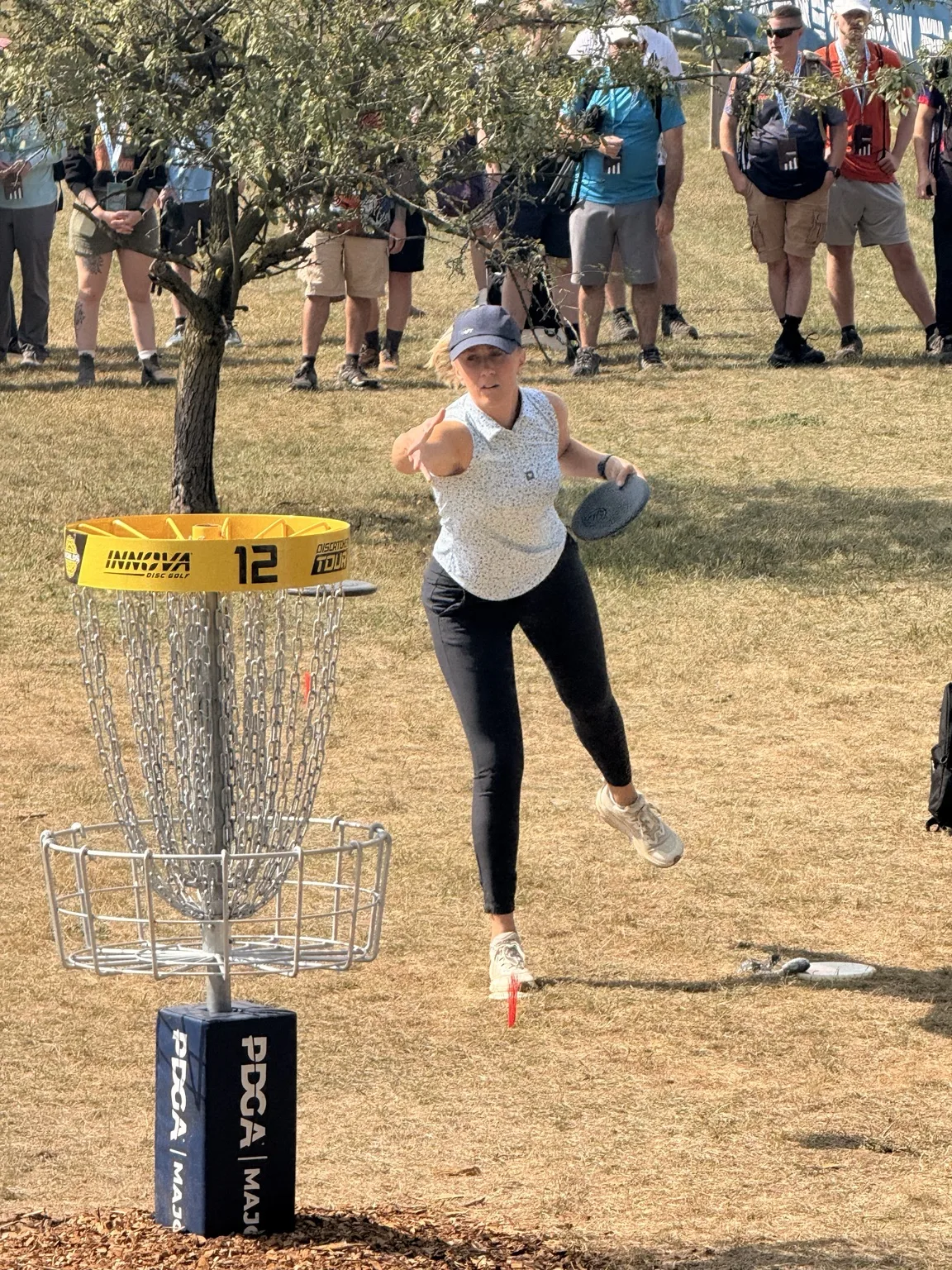
FROM THE GALLERY

The championship format finally felt connected to the season
A season finale works when it creates pressure without pretending the previous seven months did not happen.
The World Standings determined qualification and preserved a season-long race, while the Powerball Cup remained its own championship with a life-changing payout.
That produced two sets of winners worth remembering: Scoggins and Buhr as World Standings champions, Saarinen and Buhr as Powerball Cup champions.
Buhr completed the double. In FPO, the split result reflected the depth of the season instead of creating a contradiction.
The next step is consistency. A record purse creates attention; reliable event standards, useful broadcast storytelling and understandable qualification rules create trust.
The Tour's 2027 challenge is to make the improved scale feel normal rather than temporary.
What the average player can take from the professional season
The most useful lesson is not to copy a professional's disc speed. It is to copy the way elite players assign a job to the shot.
Buhr's fairway percentage at the finale mattered because it kept creating the next scoring opportunity. Saarinen's season mattered because she combined winning peaks with repeated podium-level golf.
For an amateur, the translation is simple: build around controllable flights, track the miss that costs the next shot and judge a round by decision quality as well as score.
Tour golf looks spectacular, but its foundation is ordinary—landing zones, predictable finishes and putting routines held together under pressure.
The brand paths below open broad manufacturer collections in the live BlueJayDG rack. They are a way to compare available lineups, not an invitation to buy the exact molds or speeds used by a touring professional.
Compare exact photos, price, condition and flight numbers in the live inventory—or join the Flight List for new drops and field notes.