
COLD-WEATHER BAG GUIDE · 8 min read
Cold-Weather Discs: Build a Winter Bag That Still Grips and Flies
Cold air, stiff hands, layers and slick footing change more than comfort. Learn how plastic flexibility, stability, weight and color should change your winter disc golf bag.
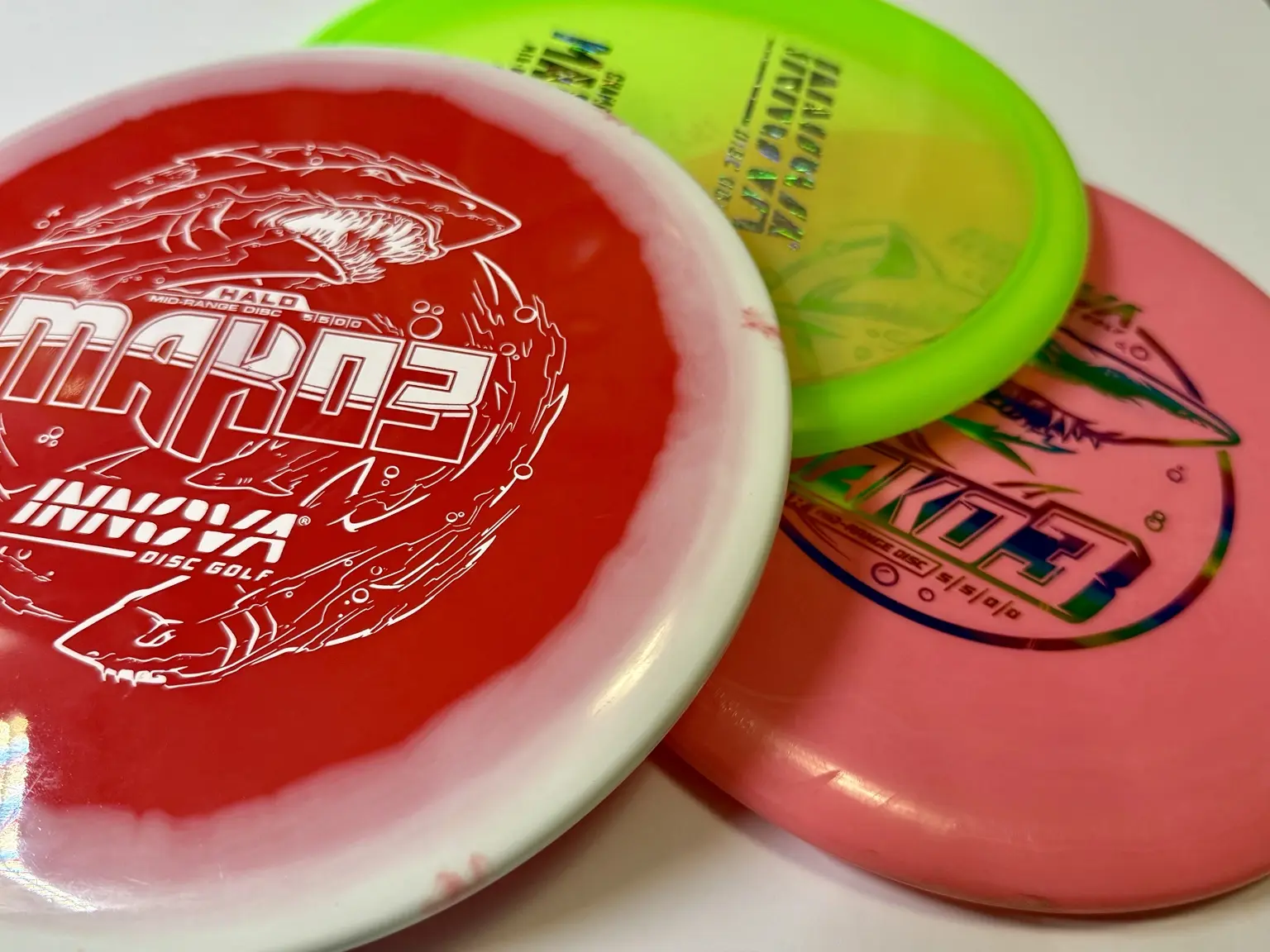
Cold changes the throw before it changes the disc
Extra layers restrict the shoulder, cold muscles produce less speed and cautious footing makes a full brace harder.
The result is often a lower-power release with less spin. A disc that flies straight in July may fade earlier in January even if the mold has not changed at all.
Start by reducing effort rather than forcing distance. A neutral midrange or fairway thrown smoothly can be more accurate than a high-speed driver released from a slippery tee.
If several familiar discs all finish early, move toward a slower or slightly more understable option instead of trying to overpower the weather.
Cold air is also denser, but for most recreational players the bigger practical effects are grip, clothing and movement. Build the winter bag around the throw you can repeat while dressed for the conditions.
Softer plastic keeps the hand connected
Plastic generally feels firmer as temperature drops. A blend that is comfortably flexible in summer may become slick or rigid in freezing weather, while a softer blend can preserve grip and give the fingers a cleaner release.
Innova specifically recommends GStar as a flexible premium winter option and R-Pro for cold or wet putt-and-approach use. Across other brands, look for the same functional traits: softer premium blends, flexible variants and tackier base plastics.
A familiar mold in a winter-friendly blend is often a safer change than learning an entirely new flight.
Inspect older discs before a freezing round. Very stiff or already damaged plastic deserves extra caution around trees.
Keep towels dry, rotate them before they become saturated and avoid warming a wet disc so much that melting snow becomes another slick layer.
Tune stability, weight and visibility one step at a time
Reduced power can make the whole bag behave more overstable. A small move toward turn or glide may restore the intended shape, but do not replace every dependable disc at once.
Test the same line with your normal disc, then with one slower or more workable option, and keep the change that produces a predictable landing.
Some players benefit from slightly lighter drivers because they reach usable speed with less effort. The tradeoff is wind sensitivity, which matters on exposed winter courses.
Keep one stable or overstable fairway for headwinds and controlled finishes even if most of the bag becomes easier to turn.
Choose colors for the ground you expect. White disappears in snow, clear plastic can vanish in ice and dark earth tones are difficult in wet leaves.
Bright pink, blue, orange and chartreuse usually give the best chance of finding a disc before hands and daylight run out.
| Problem | Useful adjustment | Avoid |
|---|---|---|
| Disc feels rigid | Softer or flexible plastic in a known mold | Changing mold, plastic and weight together |
| Everything fades early | Slower speed or modestly more turn | Forcing a full-power run-up on poor footing |
| Cold headwind | Stable fairway or approach disc | Removing every overstable option |
| Snow or wet leaves | High-contrast opaque colors | White, clear or earth-tone discs |
Shop for feel by brand, then verify the exact disc
Brand catalogs are useful because each manufacturer names its flexible and grippy plastics differently. Browse the lineup first, compare the plastic notes, then confirm the exact weight, condition and photograph before buying.
A brand page keeps the search broad enough to find alternatives without pretending one mold is the universal winter answer.
The four paths below open current BlueJayDG brand collections. Availability changes with the eBay rack, so an empty or small collection simply means that brand needs a restock rather than that the article is pointing at a sold disc.
Compare exact photos, price, condition and flight numbers in the live inventory—or join the Flight List for new drops and field notes.