
BEGINNER SERIES · 5 min read
A Beginner Disc Golf Pre-Shot Routine: See It, Choose It, Throw It
A short routine keeps the target, disc and release connected so one bad throw does not turn into several rushed decisions.
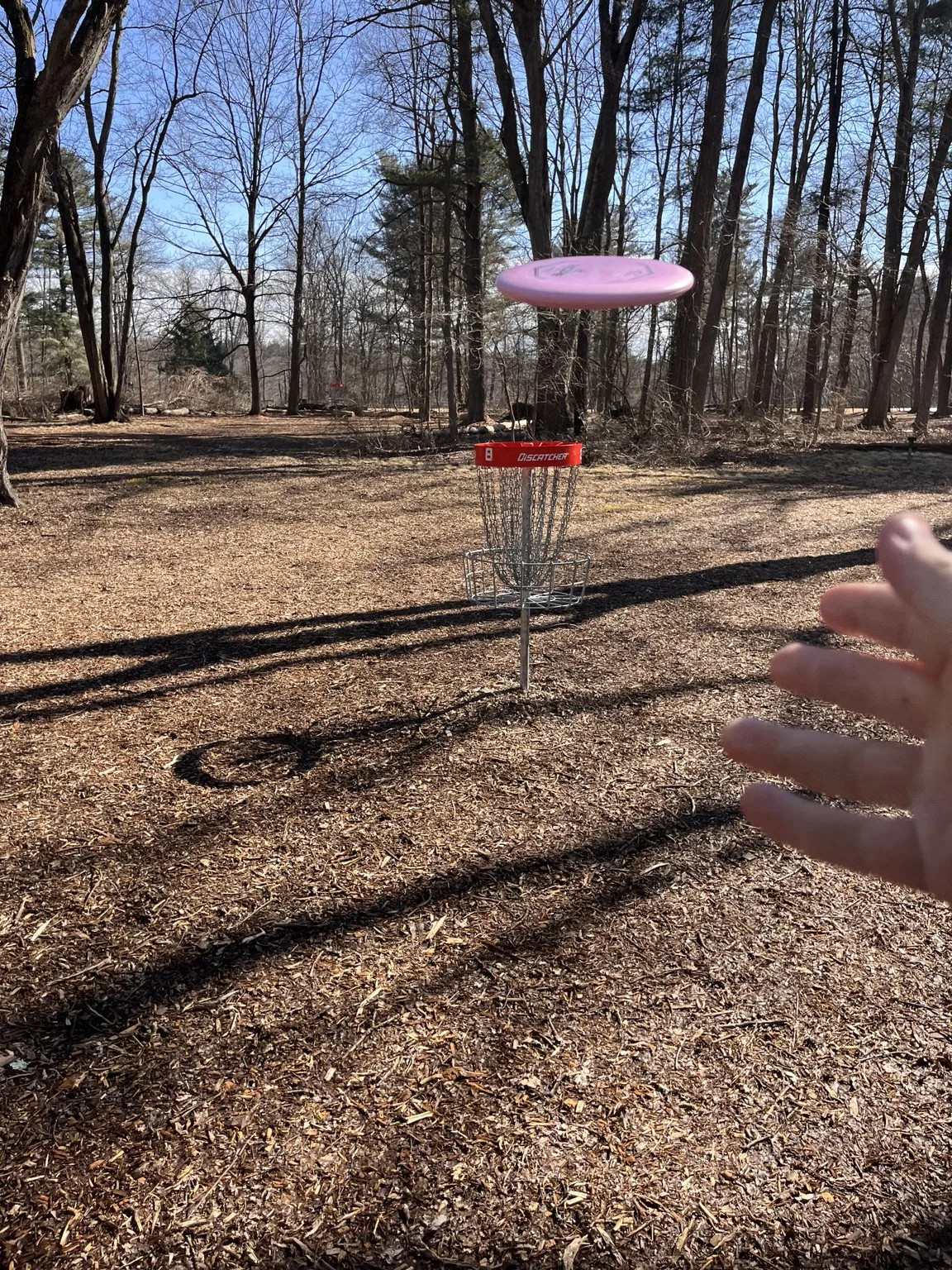
Step one: see the landing zone
Look beyond the basket and decide where the disc should land. On a short hole, that may be the center of the green.
On a longer hole, it may be the widest part of the fairway. A clear landing zone gives the throw a useful job even when the basket is out of reach.
Choose the safe miss at the same time. If trouble is deep right, the plan should not rely on a disc that must finish there. Beginners improve faster when the intended miss is part of the shot instead of a surprise after release.
Step two: choose the simplest flight
Select the slowest disc that can comfortably reach the landing area. A familiar putter or midrange often needs less movement than a fast driver and usually lands with less skip.
Match the disc to the shot you can repeat today, not the flight you hope appears once.
Name the release in a few words: flat to the center, small hyzer to the left side or gentle turnover to the right. If the plan needs a long explanation, simplify it before stepping onto the tee.
| Step | Question | Simple cue |
|---|---|---|
| See it | Where should the disc land? | Pick one landing zone |
| Choose it | Which familiar disc reaches it? | Use the simplest flight |
| Throw it | Can I finish in balance? | Commit and hold the finish |
Step three: throw without restarting
Take one breath, set the feet and make the practiced motion. Avoid adding extra waggles or changing discs after the routine has started unless a real condition changes, such as a sudden gust or a person entering the throwing area.
After the throw, judge the decision before the result. A well-chosen shot that catches one branch may still be a good process. A lucky shot thrown without a plan is harder to repeat. Write the three cues on a mini marker until the sequence becomes automatic.
Compare exact photos, price, condition and flight numbers in the live inventory—or join the Flight List for new drops and field notes.